
Google November 2026 Core Update: What Businesses in Laos Need to Know

If your hotel, restaurant or tour company in Laos gets customers from Google, the Google November 2026 Core Update deserves a few minutes of your attention. Google started rolling it out on 10 November 2026, which was early on 11 November in Vientiane. For many businesses here, the timing is awkward: it lands right in the middle of high season, when travellers are searching for places to stay in Luang Prabang, restaurants in Vientiane and day trips to Kuang Si or Vang Vieng.
This guide explains what Google has actually confirmed, what it has not, and what a business in Laos should (and should not) do while rankings settle. We stick to verified facts and official guidance. No rumours, no “secret ranking factors”.
What Is Google’s November 2026 Core Update?
A core update is a broad change to the systems Google uses to rank search results. Google’s own documentation describes core updates as “significant, broad changes to our search algorithms and systems” that it makes several times a year. They are not penalties, and they do not target a specific website, country or industry. Instead, Google re-evaluates how well pages answer searchers’ needs, so some pages rise and others fall.
The November 2026 Core Update is the third core update of 2026, after the March update (27 March to 8 April) and the May update (21 May to 2 June). You can read Google’s general explanation in its official guide to core updates.
| Key fact | Status (as of 23 November 2026) |
|---|---|
| Rollout start | 10 November 2026, about 10:06 a.m. US Pacific time (18:06 UTC) |
| Scope | Global, all languages, including Lao, English, French and Thai searches |
| Expected duration | “Up to 2 weeks”, according to Google |
| Current status | Still listed as rolling out on the Google Search Status Dashboard |
| Specific targets | None announced by Google |
What Has Google Officially Confirmed?
Google’s communication about this update has been brief, which is normal for core updates. Here is everything that comes directly from Google:
- The launch. The Google Search Status Dashboard lists the November 2026 core update as starting on 10 November and applying globally to all languages, with a rollout that may take up to two weeks.
- The purpose. On LinkedIn, Google Search Central called it a regular update designed to surface relevant, satisfying content from all types of sites.
- No new rules. Google has not named any new ranking factor, target industry or content type. Its existing core update guidance still applies.
- Status. At the time of writing (23 November 2026), the dashboard had not yet marked the rollout as complete. Past core updates have sometimes run longer than their estimate, so treat “two weeks” as a guide rather than a deadline.
Industry coverage from Search Engine Land and Search Engine Journal confirms the same details. Search Engine Roundtable reported that discussion of this update has been quieter than usual, with most visible movement starting around 13 to 14 November and a mix of gains and losses across sites. These are observations from SEO professionals, not statements from Google, so they should be read as early signals rather than conclusions.
How Could the Update Affect Websites in Laos?
Because a core update re-assesses quality and relevance across the whole index, any site can move. In Laos, that matters most for businesses that rely on a small number of high-intent searches. A few realistic scenarios:
- A boutique hotel in Luang Prabang that ranks for “boutique hotel Luang Prabang” competes with booking platforms, travel blogs and other hotels. If its room pages are thin or copied from a booking site, more detailed competitors may overtake it.
- A restaurant in Vientiane may see its website move less than its Google Business Profile, because local “near me” searches lean heavily on map results. Core updates mainly affect organic web results, but the two often influence each other.
- A tour operator selling Kuang Si, Mekong or Vang Vieng trips often competes with large international travel sites. Pages that show real itineraries, prices, photos and guide expertise usually hold up better than generic “top 10 things to do” articles.
There is also a seasonal trap. November to February is peak travel season in Laos, so traffic naturally rises. A hotel that sees more visits in late November may be enjoying high season, not a ranking gain, and a flat month may actually hide a ranking loss. Always compare like with like.
How to Identify Ranking Changes in Google Search Console
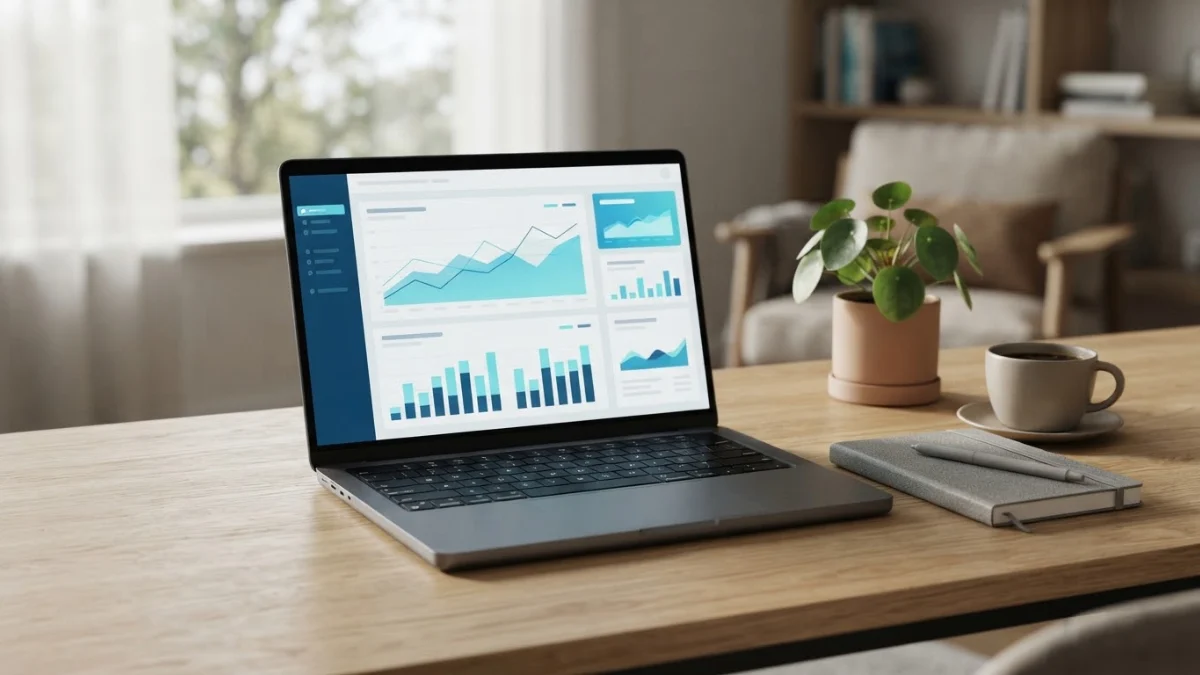
Google Search Console is the most reliable free tool for measuring the impact of a core update on your own site. Third-party rank trackers are useful, but several SEO professionals have noted that they have struggled to track this update, so your own Search Console data should be the reference.
Wait for the right moment
Google recommends waiting until the rollout has finished, then waiting at least one full week more before drawing conclusions. After that, compare the week after completion with a week before the rollout began (for this update, the week before 10 November).
A simple step-by-step check
- Open Performance > Search results in Search Console.
- Use Compare to set two equal periods: the week before 10 November and a full week after the update completes.
- Look at the Pages tab to see which URLs lost or gained clicks, and the Queries tab to see which searches changed.
- Filter by Country. A Luang Prabang hotel may see different trends from French, Thai and US travellers.
- Check Web, Image and other search types separately, as Google suggests, to find where any drop actually happened.
- Add a year-over-year comparison (November 2025 vs November 2026) to separate high-season effects from ranking effects.
A drop of a few positions on a handful of keywords is normal fluctuation. Google itself advises against drastic changes in that case. A large, sustained drop across important pages is the signal that deserves a deeper review.
What Businesses Should Do After a Core Update
Google is clear that there is no quick “fix” for a core update, because nothing is technically broken. What it rewards over time is content that genuinely helps people. Based on Google’s guidance on helpful, reliable, people-first content, here is a sensible plan:
- Don’t panic during the rollout. Rankings can move up and down for days. Avoid redesigning your site or rewriting everything while the update is still in progress.
- Review your most affected pages honestly. Compare them with the pages now ranking above you. Do competitors answer the question more completely, with more first-hand detail, clearer prices or better photos?
- Improve, don’t just add words. Restructure pages so they are easier to read, update outdated information and remove duplication. Google describes deleting content as a last resort.
- Show real experience. Name the people behind your business, show your own photos, and share knowledge only a local business has.
- Fix technical friction. Slow mobile pages, broken links and confusing navigation do not cause core update drops on their own, but they hurt the experience that good rankings depend on.
- Be patient. Google says some improvements show within days, but confirming lasting recovery can take months, and sometimes only arrives with the next core update.

SEO Recommendations for Hotels, Restaurants and Travel Agencies
Every sector in Laos has its own strengths to bring forward. These recommendations follow Google’s long-standing advice and work regardless of any single update.
Hotels and guesthouses
- Give every room type its own page with original photos, size, view, amenities and clear booking options.
- Write useful local content: how to get from Luang Prabang airport, walking time to the night market, the best time to see the alms giving respectfully.
- Keep your name, address, phone number and opening details identical on your website, Google Business Profile and booking platforms.
Restaurants and cafés
- Publish your menu as real text, not only a photo or PDF, so Google can read dishes like laap, khao piak sen or mok pa.
- Keep opening hours accurate, especially around Lao holidays and festivals.
- Encourage genuine reviews and reply to them. Local search visibility in Vientiane depends heavily on your Google Business Profile. Our guide to local SEO in Laos explains how to set it up properly.
Tour operators and travel agencies
- Create detailed itinerary pages: duration, what is included, difficulty, pick-up points and the season each tour works best.
- Show your guides, licences and experience. First-hand knowledge is something large international platforms cannot copy.
- Offer key pages in your customers’ languages (for example English and French) instead of relying on automatic translation.
Strong organic rankings take time to build. If high season revenue cannot wait, a well-managed Google Ads campaign can keep bookings coming in while your SEO work matures.
How Marketing Lao Helps Businesses Improve Google Visibility
Marketing Lao is a digital marketing agency based in Laos, working with hotels, restaurants, tour operators and international companies in Luang Prabang, Vientiane and beyond. After a core update, we help businesses separate real ranking changes from seasonal noise and focus on the improvements that matter.
- SEO audits and strategy: Search Console analysis, content review and technical checks through our SEO agency services in Laos.
- Local and natural SEO: visibility in Luang Prabang, Vientiane and across the country with our natural SEO services.
- Fast, mobile-friendly websites: built for search from day one with our professional website creation service.
- Paid visibility: Google Ads and social campaigns through our online advertising services.
We will never promise guaranteed rankings. Nobody can honestly do that. What we offer is a clear, evidence-based plan built around your customers and your market.
Frequently Asked Questions
Google began rolling out the November 2026 core update on 10 November 2026, at about 10:06 a.m. US Pacific time. In Laos, that was early on 11 November.
As of 23 November 2026, the Google Search Status Dashboard still listed the update as rolling out. Google said the rollout may take up to two weeks. Check the dashboard for the latest status.
No. The update applies globally and to all languages. Google has not announced any target country, industry or website type.
A core update is not a penalty. It re-assesses how well pages meet searchers’ needs. Wait until the rollout ends, then wait one more full week and compare your Search Console data with the week before the update before making major changes.
Google says some changes can take effect within days, but confirming a lasting improvement can take several months. In some cases, recovery only becomes visible after a later core update.
Conclusion: Stay Calm, Measure Carefully, Improve What Matters
The Google November 2026 Core Update is a regular, global update, not a crisis aimed at Laos. The businesses that come out ahead are usually the ones that wait for reliable data, compare it carefully against high-season patterns, and then keep improving the pages their customers actually use. Clear room pages, real menus, detailed itineraries and fast mobile websites are what help over the long term.
Not sure how the update has affected your website? Our team can review your Search Console data and give you a clear, honest action plan for your hotel, restaurant or travel business.


Pingback: How to Optimize Your Business for Local SEO in Laos - Marketing Lao